- Market size 2026: USD 1.2–1.5 billion
- Projected 2035: USD 2.8–3.5 billion (CAGR 8-10%)
- Muslim residents: 350,000 (grew from 110,000 in 2010)
- Muslim tourists 2024-2025: 1.5 million annually (+15-20% per year)
- Halal certification bodies in Japan: 30+
- Source: IndexBox Market Report 2026, Salaam Gateway, IMARC Group
1 Why Japan's Halal Industry Is Growing Now
Several converging factors have triggered Japan's halal food industry boom since 2020:
- Muslim population growth: 350,000 residents in 2024 — up 218% since 2010. Growing workforce immigration from Indonesia, Malaysia, Pakistan, Bangladesh driving domestic demand
- Tourism surge: Muslim tourist arrivals exceeded 1.5 million in 2024-2025, growing 15-20% annually since post-pandemic reopening. Malaysia and Indonesia alone sent 1 million visitors in 2024
- Export opportunity: Japanese food brands seeking access to USD 2+ trillion global halal market. Halal certification is described as "a passport for business" in Islamic markets
- 2026 Asian Games: Aichi Prefecture is preparing major halal infrastructure for Muslim athletes from across Asia — expected to accelerate halal development in Nagoya region significantly
- Government support: JETRO and Japan Tourism Agency actively promoting halal tourism infrastructure. NAHA targeting 10,000 halal-certified Japanese companies
2 Technology Innovation — Japan Leads Halal Verification
Japan is deploying cutting-edge technology to solve halal compliance challenges unique to non-Muslim countries:
Ajinomoto launched an AI-powered halal verification system across 200 production lines. The system achieves 100% compliance tracking and reduces certification costs by 30% through automated monitoring. This is a global first in applying AI specifically to halal production compliance at industrial scale.
Kikkoman's blockchain-based supply chain platform tracked 1.8 million halal soy sauce bottles from production to retail, increasing consumer trust by 45% through transparent ingredient sourcing. Consumers can trace the entire journey of each bottle — from raw soybeans through fermentation to bottling — confirming no haram contamination at any stage.
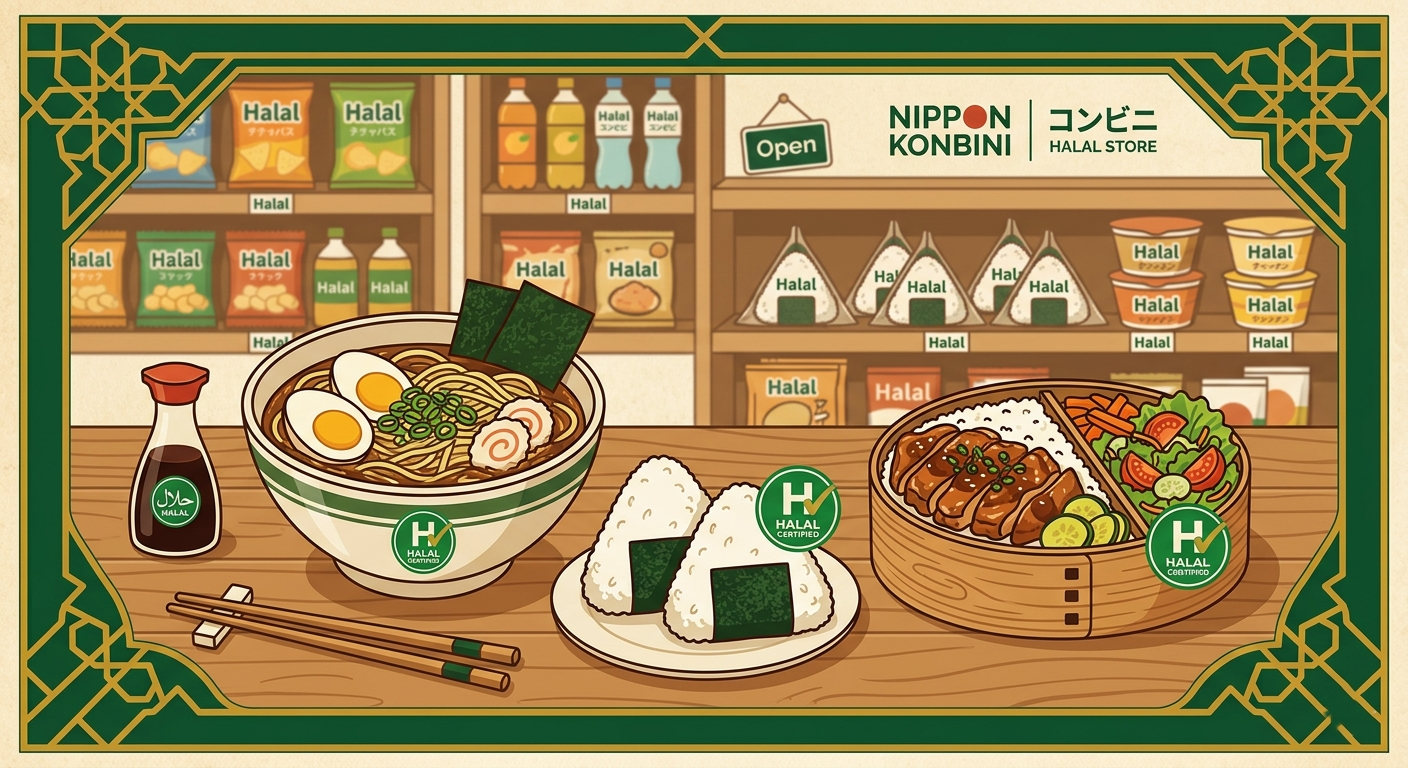
Seven-Eleven expanded halal food to 5,000 stores nationwide with QR code verification. Customers scan the QR code on packaging with their smartphone to instantly confirm the product's halal certification status, certification body, and certification validity date.
3 Challenges Japan Still Faces
- Fragmented certification: 30+ halal certification bodies in Japan — no unified government standard unlike Malaysia's JAKIM. Creates confusion for consumers and compliance complexity for manufacturers
- Multi-certification cost: Products certified under JAKIM (Malaysia) may not be accepted by Middle Eastern importers — forcing multi-certification adding 10-20% to certification costs
- Halal slaughterhouses: Japan's domestic livestock sector lacks widespread halal slaughterhouse certification. Most halal meat is still imported (Brazil, Australia)
- Rural access: Halal products concentrated in major metropolitan areas. Rural Muslims still face significant challenges
- Unauthorized logos: Many unrecognized halal logos in Japan market. MPJA warns consumers to verify certification body recognition
4 Future Outlook — What Muslims in Japan Can Expect
- 2026: Insurance coverage for childbirth under review (may benefit Muslim families). Aichi Asian Games drives halal infrastructure in Nagoya region. MPJA completes BPJPH Indonesia certification process
- 2027-2030: Supermarkets projected to expand from 50-100 to 200-400 halal SKUs per store. Industrial food manufacturing segment growing 10-12% annually
- 2030-2035: Market projected to reach USD 3.5 billion. Muslim tourists projected at 3-4 million annually. National halal labeling standards under discussion
- Halal food will become progressively easier to find even outside Tokyo and Osaka
- More Japanese restaurant chains will offer halal options as tourist infrastructure expands
- Halal certified Japanese products (soy sauce, miso, noodles) will become more widely available
- QR verification and app-based halal checking will become standard across major retailers
- Halal meat slaughterhouses in Japan will increase — reducing reliance on imported meat
📝 Key Takeaways
- Japan's halal market: USD 1.5B in 2026 → USD 3.5B by 2035
- Muslim population grew 218% (110k to 350k) from 2010 to 2024
- Ajinomoto deployed AI halal verification across 200 production lines (Feb 2025)
- Kikkoman tracking 1.8M halal bottles via blockchain (Jun 2025)
- Seven-Eleven expanding halal to 5,000 stores with QR verification (Mar 2025)
- 2026 Asian Games in Aichi will accelerate halal infrastructure in Nagoya region
- 30+ halal certification bodies in Japan — look for JHA, MPJA, JAKIM logos
- Supermarkets projected to offer 200-400 halal SKUs by 2030