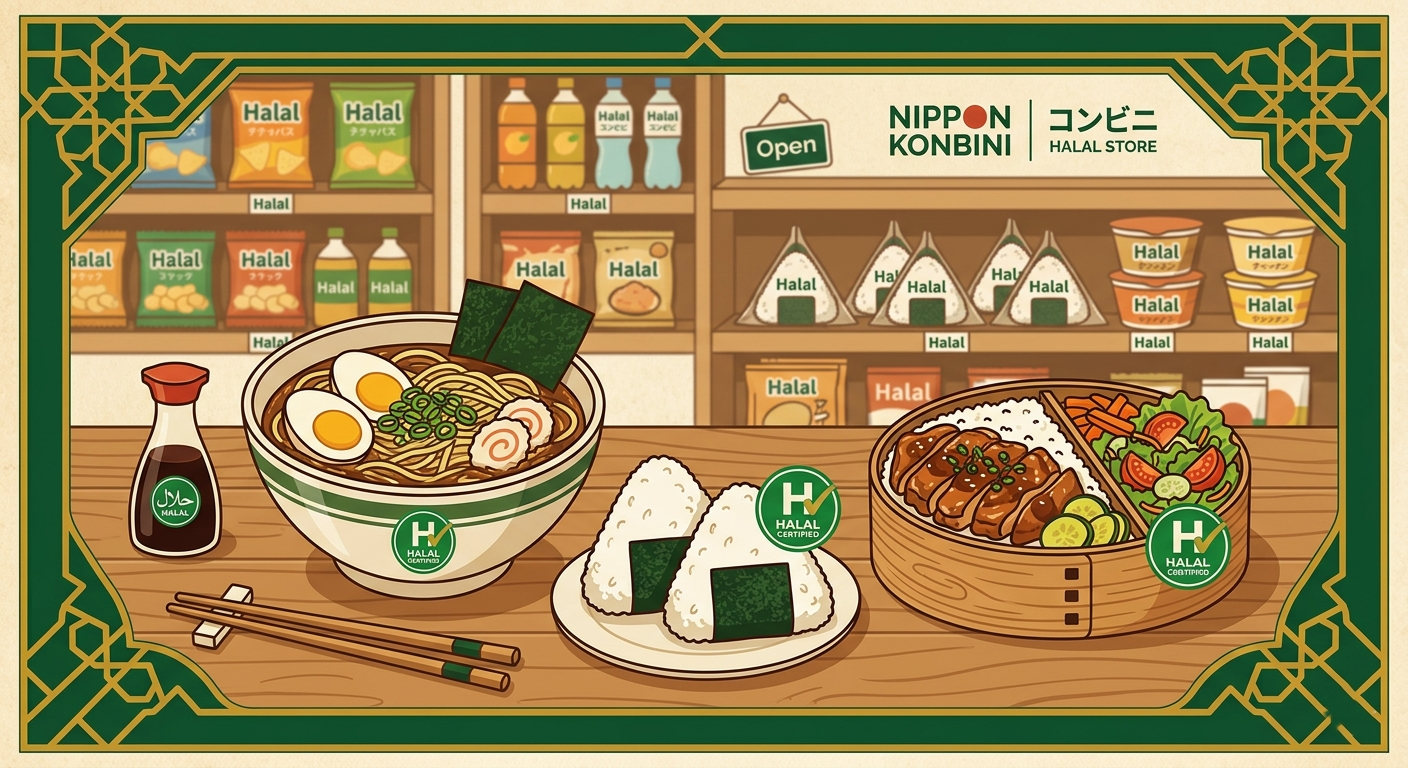
Many common Japanese foods contain hidden haram ingredients — including mirin (rice wine), pork extracts in soup stocks, and alcohol-based flavorings. Always check carefully.
1. Japan Has No National Halal Law
Unlike Malaysia or Indonesia, Japan has no government-mandated halal certification system. Any restaurant or product claiming to be halal in Japan has been certified by a private organization — or simply self-declared. This means:
- The word "halal" on a product or restaurant has no legal enforcement
- Standards vary widely between certification bodies
- Some establishments self-declare halal without any third-party verification
- Always verify — don't assume
2. Trusted Halal Certification Bodies in Japan
These organizations provide legitimate halal certification in Japan:
- NPO Japan Halal Association (JHA) — Approved by JAKIM (Malaysia), MUIS (Singapore), BPJPH (Indonesia), HAK (Turkey), GAC (Gulf countries), MOIAT (UAE)
- Muslim Professional Japan Association (MPJA)
- Japan Islamic Trust
- Nippon Asia Halal Association (NAHA)
When a product or restaurant displays one of these certifications, it has undergone actual inspection and meets recognized halal standards.
3. Hidden Haram Ingredients in Japanese Food
This is critical knowledge for Muslims living in Japan. Common Japanese foods that may contain haram ingredients:
- Mirin (みりん) — sweet rice wine used in almost all Japanese cooking
- Sake (酒) — cooking sake used in marinades and stocks
- Dashi (だし) — stock often made from katsuobushi (bonito/fish) — check if pork-derived
- Lard (ラード) — pork fat used in ramen broths and some pastries
- Gelatin (ゼラチン) — often pork-derived in candies, yogurt, desserts
- Soy sauce (醤油) — trace alcohol from fermentation (scholars differ)
- White wine/cooking alcohol — used in Western-style Japanese dishes
4. Convenience Store & Supermarket Guide
7-Eleven, FamilyMart, and Lawson carry millions of products. Tips for Muslims:
- Plain rice balls (onigiri) with tuna or plum — usually safe but check for mirin
- Boiled eggs — generally safe
- Fruit and vegetables — always safe
- Packaged nuts, dried fruit — check for alcohol-based flavorings
- Most sandwiches and bento contain pork or alcohol-based ingredients
Scan any product barcode or photograph the ingredients list in our app — our AI will analyze for haram ingredients instantly.
5. How to Identify Halal Restaurants
When eating out in Japan:
- Certified halal — displays official certification from a recognized body
- Muslim-owned — owner is Muslim and personally ensures halal standards
- Muslim-friendly — no pork on menu but may use cooking wine
- Has halal options — some dishes are halal-adaptable on request
Always ask specifically: "Does this contain pork or alcohol?" (「豚肉やアルコールは入っていますか?」)
6. The Vegetarian/Vegan Option
Many Muslims in Japan opt for vegetarian meals when halal options are unavailable. However, note that:
- Japanese vegetarian food often uses dashi (fish stock)
- Vegan options are more reliably free from animal products
- Buddhist temple cuisine (精進料理, shojin ryori) is fully plant-based
📝 Summary
- Japan has no national halal law — verify all certifications independently
- Trust only recognized certification bodies (JHA, MPJA, Japan Islamic Trust)
- Mirin, sake, lard, and pork-based dashi are hidden in many Japanese dishes
- Use the Halal Seikatsu scanner to check product ingredients
- When in doubt, vegetarian/vegan options are safer
- Always ask restaurants directly about pork and alcohol content