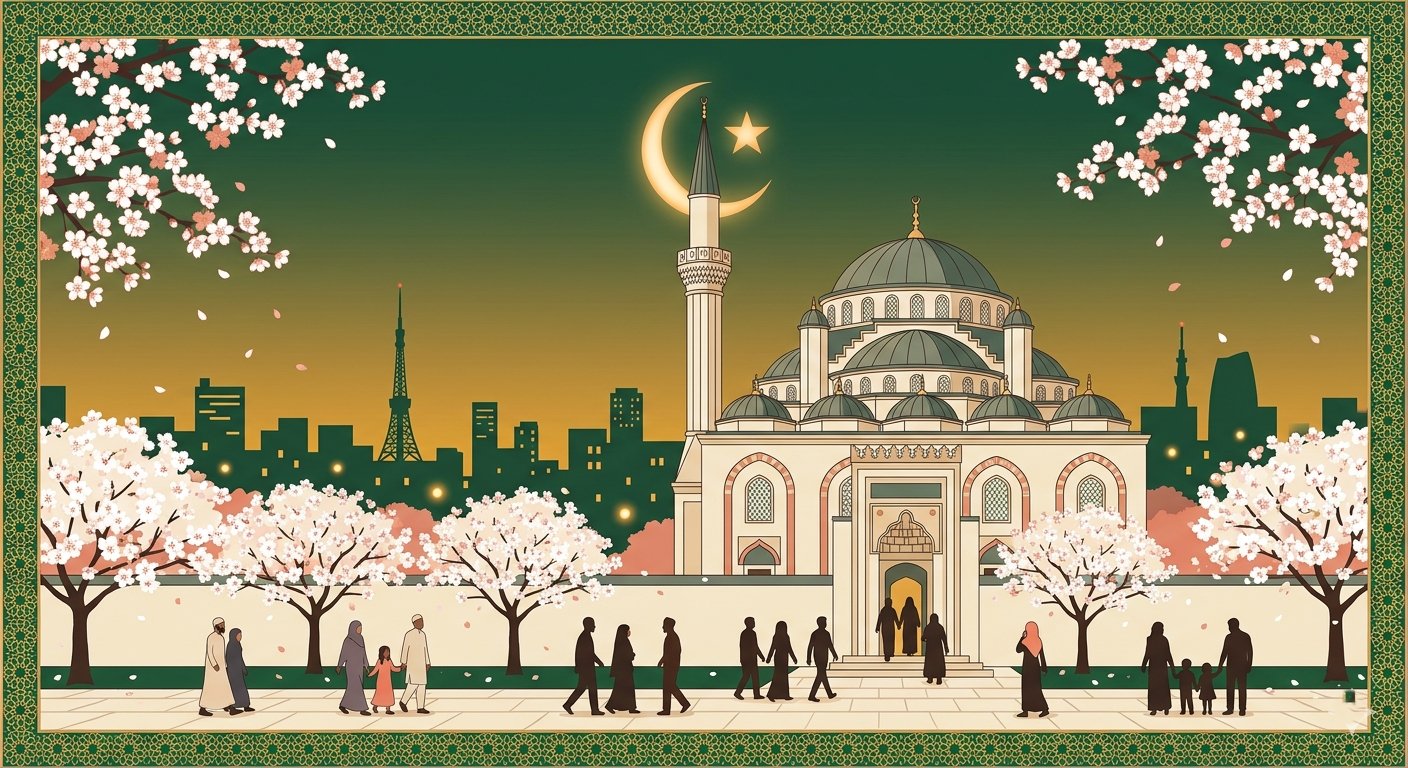
Japan's Muslim community has grown rapidly — from 110,000 in 2010 to approximately 350,000 by 2025. The number of mosques has increased from just 4 in 1980 to over 150 by 2024.
1. Legal Status of Mosques in Japan
Mosques in Japan can be registered under the Religious Juridical Persons Law (宗教法人法). Registration provides:
- Legal entity status — can own property, open bank accounts, enter contracts
- Tax exemptions on religious activities and property
- Protection and recognition under Japanese law
- Eligibility for charitable status
The Japan Muslim Association (日本ムスリム協会) and Japan Islamic Trust (日本イスラム信託) are the two largest registered Islamic organizations in Japan.
2. Types of Muslim Prayer Spaces
- Full Mosque (マスジド) — dedicated building with prayer hall, wudu, women's section, Jummah
- Islamic Center (イスラミックセンター) — multi-purpose community center with prayer space
- Musalla (礼拝室) — small prayer room, may not hold Jummah
- Prayer rooms at airports, universities, shopping malls — growing in number across Japan
3. Major Mosques in Japan
Key mosque hubs by region:
- Tokyo — Tokyo Camii (largest in Japan, Shibuya), Otsuka Masjid, Masjid Nishikasai
- Osaka — Masjid Osaka Ibaraki, Ikuno Islamic Center
- Nagoya — Nagoya Mosque (Showa-ku)
- Kobe — Kobe Mosque (historic, built 1935 — oldest in Japan)
- Saitama — Masjid Kawaguchi, Islamic Center Urawa
Use the Halal Seikatsu mosque directory to find the nearest mosque with filters for women's section, parking, wudu facilities, and Jummah time.
4. Attending Jummah Prayer
Jummah (Friday congregational prayer) is obligatory for Muslim men. In Japan:
- Most mosques hold Jummah between 12:00 and 13:30
- Some large mosques hold multiple Jummah sessions to accommodate worshippers
- Tokyo Camii is the most capacity-intensive — arrive early especially in Ramadan
- Some Islamic centers hold Jummah in Arabic, Urdu, Malay, Bengali, or Japanese
5. Prayer Rooms (礼拝室) Across Japan
Beyond mosques, prayer rooms are increasingly available at:
- Narita and Haneda airports — dedicated Muslim prayer rooms with qibla direction
- Major universities — Waseda, Keio, Tokyo University, and many others
- Shopping malls — AEON malls in Muslim-heavy areas increasingly provide prayer rooms
- Government buildings — some ward offices have prayer facilities
- Transit stations — limited but growing
6. Facilities for Muslim Women
Women's prayer facilities vary significantly between mosques. When choosing a mosque, check for:
- Separate women's prayer hall or section
- Separate entrance for women
- Wudu facilities for women
- Women's Islamic classes or halaqas
Halal Seikatsu's mosque directory includes a "women's section" filter to help Muslim women find appropriate facilities.
7. How to Start a Prayer Group or Musalla
If there is no mosque near you, you can establish a community prayer space:
- Rent a room or hall — no special permit required for private prayer gatherings
- Register as a religious organization if you grow — consult the Agency for Cultural Affairs
- Connect with the Japan Muslim Association for community support
📝 Summary
- 150+ mosques now operate across Japan — growing rapidly
- Mosques can register as legal entities under the Religious Juridical Persons Law
- Kobe Mosque is the oldest in Japan (1935); Tokyo Camii is the largest
- Prayer rooms are expanding in airports, universities and malls
- Use Halal Seikatsu directory to find mosques with women's sections and wudu
- Private prayer groups can be formed without special permits